
How Much Should Your Love Room Website Really Cost?
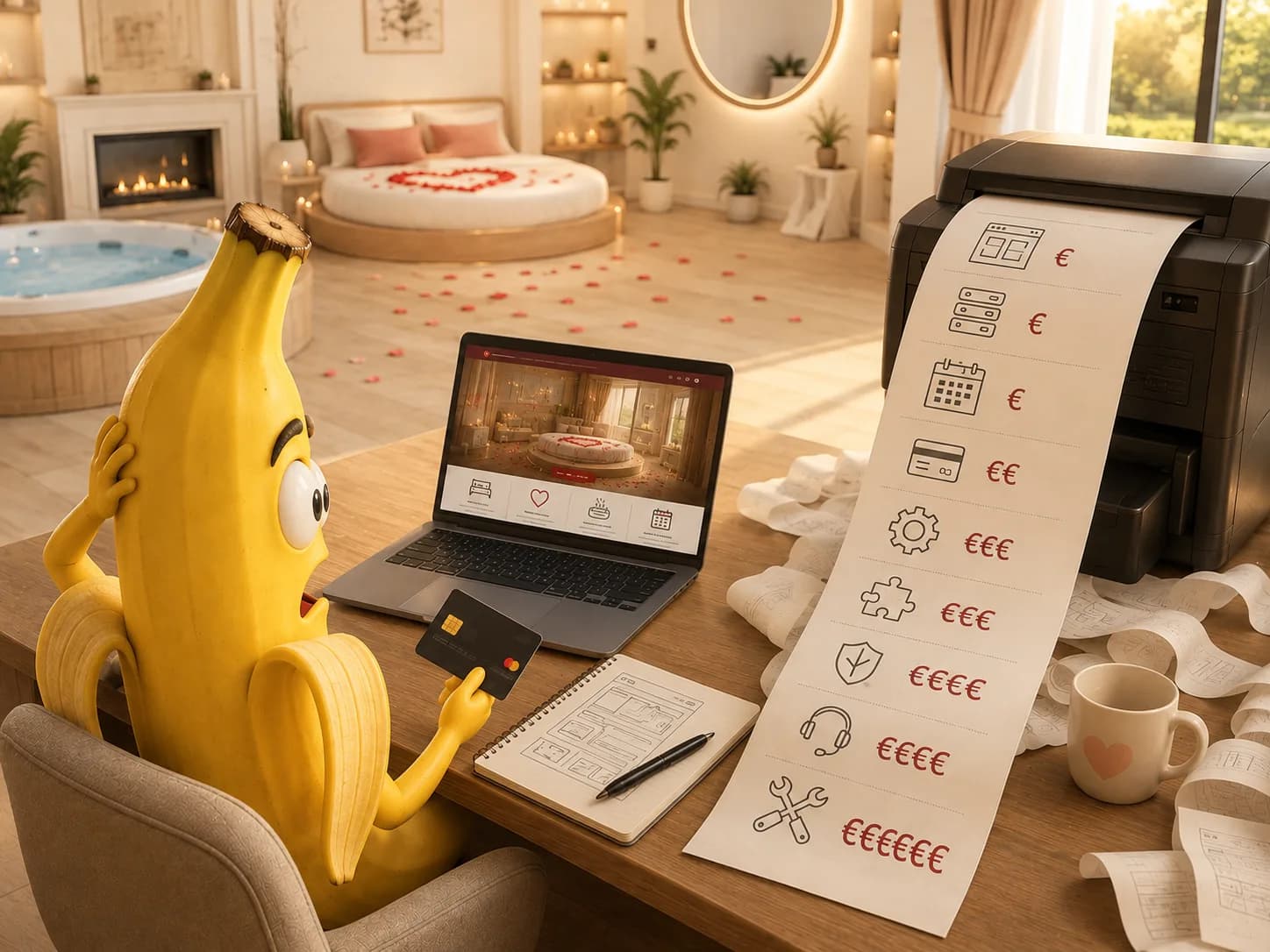
You found the property, designed the concept, spent weeks on renovations, chose the hot tub, worked out the lighting, brought in a photographer... Your Love Room — the romantic suite you've built for couples — is ready.
Now what?
You need to fill it.
Airbnb, Booking and the specialist platforms can obviously bring in bookings. But before long, another question comes up: does a romantic suite really need its own website?
The short answer? No, not to rent out your first few nights.
The slightly longer answer? If you want to grow your direct bookings, build your own client base and rely less and less on intermediaries, then yes, clearly.
But that website actually has to do something. A nice logo, a few photos and a phone number are no longer enough. Today, a website for a romantic suite needs to be capable of one very concrete thing: turning an interested visitor into a paying guest.
And that's exactly where many projects go wrong.
Can a Love Room work without a website?
Yes.
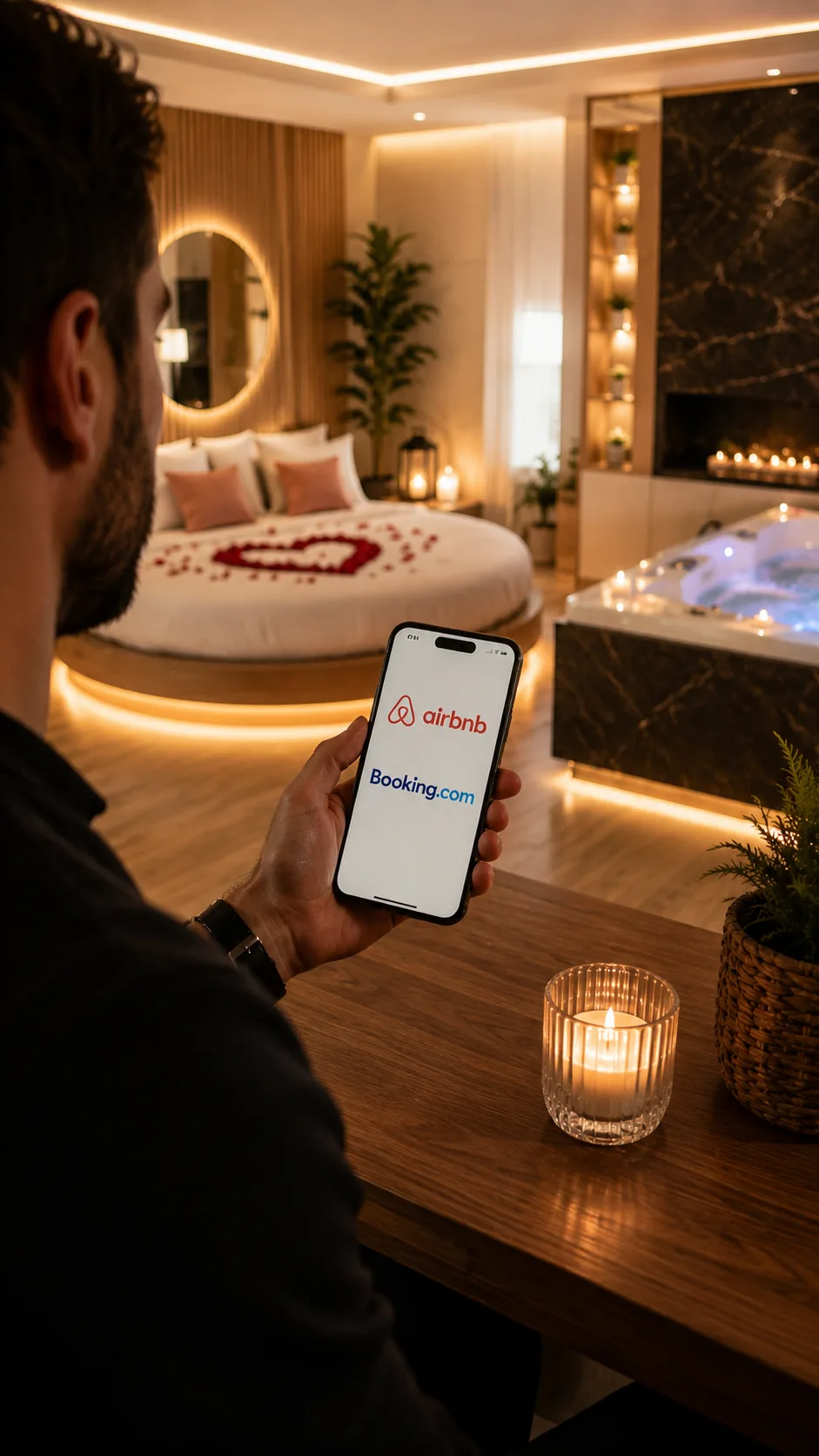
A romantic suite like this can perfectly well start out exclusively on Airbnb, Booking or various specialist platforms. To get your first bookings, first reviews and build some visibility, these channels can even be particularly useful.
The problem starts when your entire business depends on them.
Imagine a couple discovers your property on Instagram. They love the photos, remember the name of your Love Room and later search for it on Google.
What will they find?
Your official website? Perfect.
Just an Airbnb listing? There's a good chance they'll book there. Worse still, there's also a chance you'll get lost among all the other listings that might eventually catch your potential guest's eye instead.
And here's something rather paradoxical: you've just brought a customer yourself to a platform that can then charge you commission for the introduction — or edge you out of your own sale altogether.
The same thing happens with a returning guest, a recommendation from friends, a TikTok video, a Google listing, or someone who simply noticed your property's name somewhere.
You generated the interest. Yet when it comes to booking, the customer goes back to an intermediary.
Your property belongs to you. But without a direct booking channel, your customers never fully belong to you.
Your guest already knows you — so why go through a platform at all?
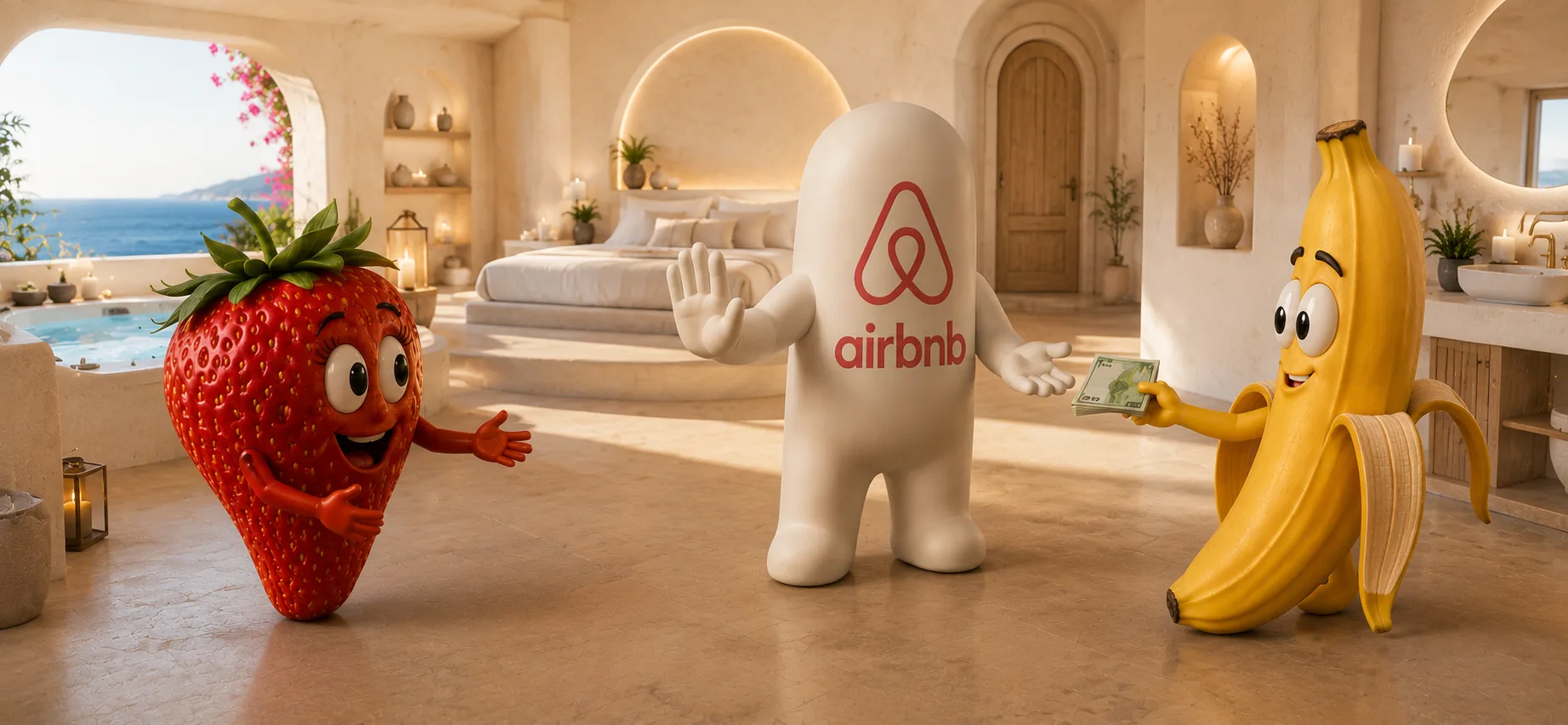
This is probably one of the best reasons to have a website for your Love Room.
The big platforms are extremely useful when they bring you someone who didn't know you existed. They generated the visibility, made the introduction and helped secure the booking.
But when a traveller types your property's name directly into Google, the acquisition work is already done.
So why keep paying for that booking?
Let's take a simple example.
Your room sells for €220 a night. A platform takes, directly or indirectly, the equivalent of 15% of the transaction.
That's €33.
One booking? Perhaps not a big deal.
Fifty bookings? €1,650.
A hundred bookings? €3,300.
And that calculation starts all over again every year.
The role of your official website then becomes clear: it lets people who already know your property — as well as those discovering you directly on Google — book without going through a commission-charging platform.
A Love Room website is not just a showcase site
You've seen this type of site before.
A nice photo. Some text about the property's history. A few icons for "hot tub", "king-size bed" and "parking". Then, right at the bottom:
To check availability, contact us.
Is that really a booking website?
Not really. It's a digital brochure.
And for tourist accommodation, that difference is fundamental.
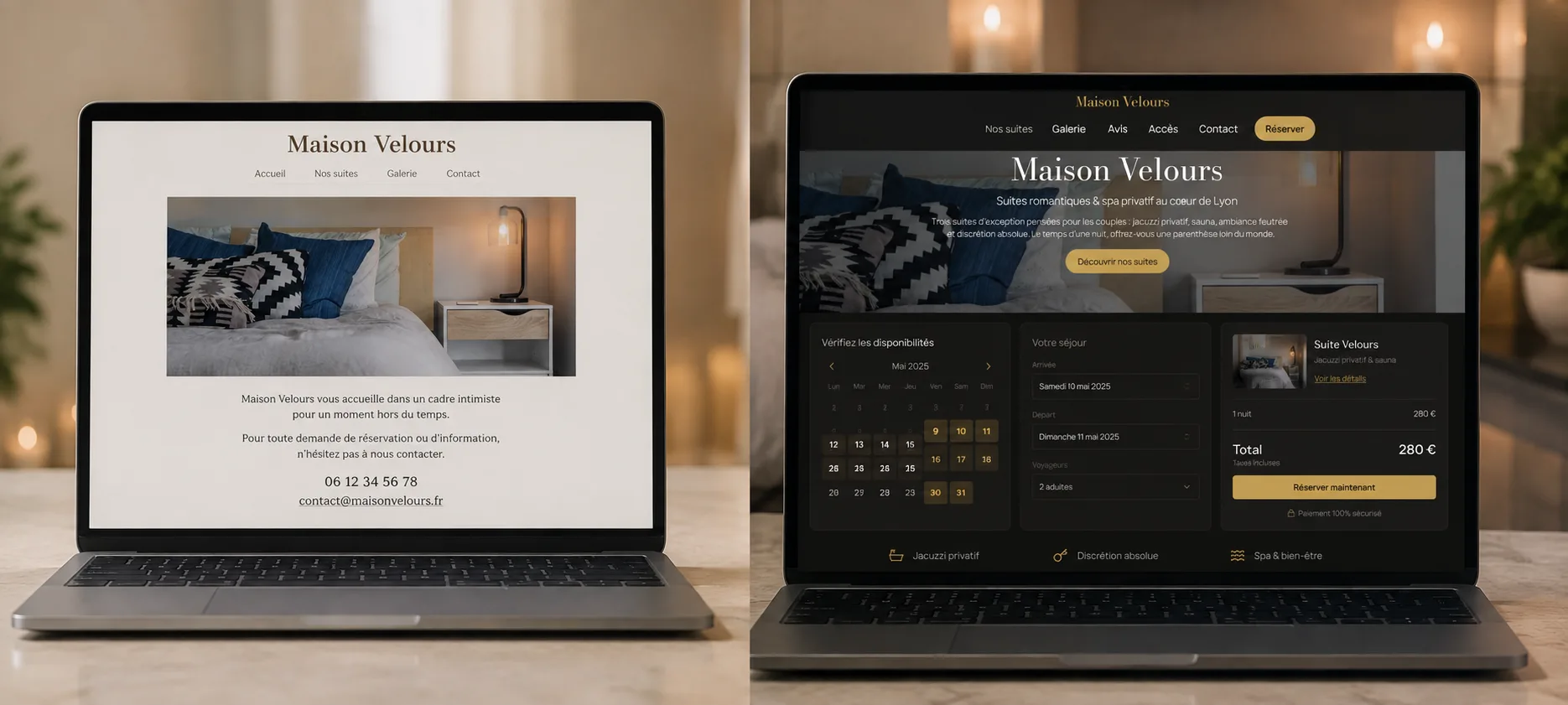
Guests want to know three things immediately
Is it available?
How much does it cost?
Can I book right now?
Picture it: it's 10:45pm. A couple is looking for a romantic suite for next Saturday. They land on your site, love the property, then discover they have to fill in a form just to find out if it's available.
Maybe they send it.
Or they go back to Google and book somewhere else five minutes later.
Instant online booking isn't just a technical nicety, then. It stops you losing customers at the exact moment they were ready to buy.
A proper Love Room website should let guests check available dates, see the price straight away, select options, book, pay and receive their confirmation without waiting for the host to step in.
Your phone has probably become your real reception desk
For a long time, websites were designed for a large computer screen, then adapted — more or less successfully — for mobile.
For a romantic getaway property, it's almost worth thinking the other way round.
A traveller's journey often looks something like this:
Instagram. A photo.
Google. The name of the property.
The website.
The calendar.
The booking.
And now, all of that can happen from a sofa, in a car, or during a lunch break, entirely on a smartphone.
A booking website for a Love Room needs to be designed with this journey in mind. The calendar should be easy to use, prices easy to understand, payment quick and the booking button always within reach.
Is that technically groundbreaking? No.
Can it be the difference between a visit and a booking? Absolutely.
Do you really need a fully custom-built website?
For an independent romantic suite, honestly: in the vast majority of cases, no.
Having a fully custom website built can cost several thousand euros. For what, exactly?
To recreate a calendar?
To build a booking system from scratch?
To construct a section for adding options?
To connect a payment module?
To create automated emails?
To sync availability?
All of these features already exist. They're used every day by thousands of properties. Having them rebuilt specifically for a single property is therefore often an expense that's difficult to justify.
Your guests, meanwhile, will never know whether your calendar took four weeks to develop. They simply want it to work.
Custom development can make sense for a hotel group, a platform, or a property with genuinely unusual technical needs. For a romantic suite looking to showcase its rooms, manage a calendar, offer options and accept payments, it rarely delivers enough value to justify the cost.
Your website should be personalised. Its underlying technology doesn't need to be rebuilt from scratch.
And that's precisely the difference.
Wix, WordPress and other builders: cheaper, but not exactly work-free
There's obviously another option: building the site yourself with Wix, WordPress, Squarespace or similar tools.
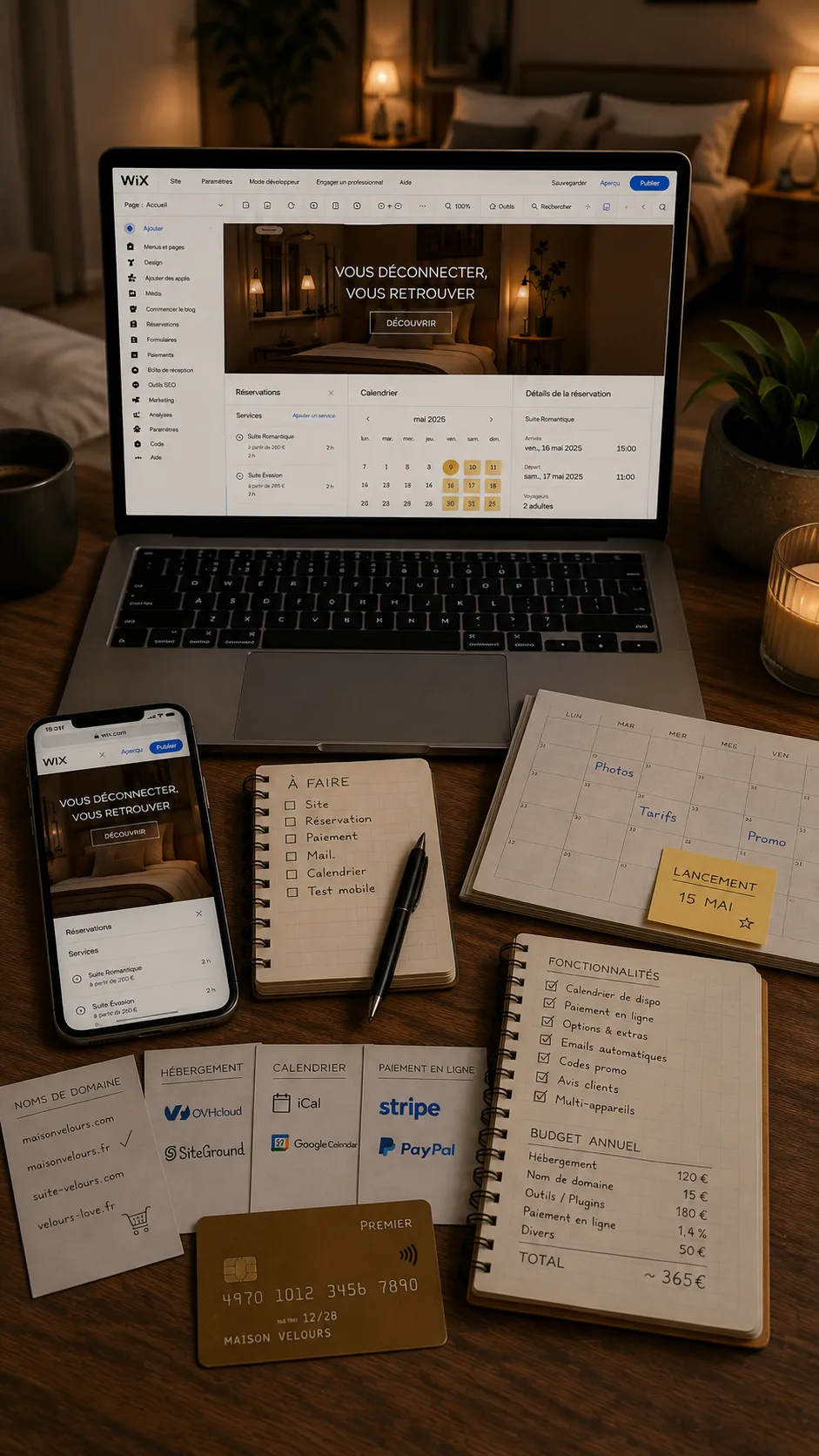
On paper, this option looks much more affordable.
And it can be.
These tools let you build a site without paying an agency several thousand euros. There are plenty of templates, the interfaces are fairly accessible, and a motivated person can get a genuinely decent result.
But "no developer" doesn't mean "no work".
You still need to choose a template, build the pages, adapt the site for mobile, set up forms, connect the domain, integrate a calendar, install or connect a booking solution, configure payments, manage automated emails and test everything.
For someone new to these tools, a full week of work can easily disappear into this. Sometimes more.
And once the site is finished, the costs keep coming.
Domain name, hosting or a platform subscription, a booking module, various extensions, extra tools... depending on the setup, the total can easily add up to several hundred euros a year — around €500 for a complete setup.
Then comes maintenance.
A tool changes, an extension stops being compatible, payments stop working properly, the site slows down, or an update breaks something.
None of this is necessarily disastrous. But someone has to deal with it.
So the real question isn't so much:
"Am I capable of building my own website?"
as:
"Is this really where I want to spend my time, when my job is running and marketing my Love Room?"
Where should your budget actually go?
Every euro spent unnecessarily rebuilding technology that already exists is a euro that won't be invested elsewhere.
A custom-built site costing several thousand euros can, for example, eat into the budget available for a professional photoshoot, an upgrade to the property, a new feature that could make the difference at booking time, SEO, or advertising.
So it's worth distinguishing what guests actually value from what's purely a matter of technical construction.
Personalising your image: yes. Paying to reinvent a booking engine: far less so.
The calculation every owner should do: what does an indirect booking really cost?
There's a lot of talk about the cost of a website. Far less about the cost of not having one.
Yet that's probably the more interesting calculation.
Take a €250-a-night romantic suite generating 80 bookings a year: €20,000 in revenue.
With a theoretical intermediation cost of 15%, that's potentially €3,000.
Would all of these guests have booked directly through a website? Of course not.
But suppose just 20% of bookings became direct.
Then 30%.
Then 40%, as the property becomes better known, builds up returning guests, and grows its Instagram following, Google visibility and word of mouth.
The savings quickly start to add up.
The goal isn't to cut out Airbnb or Booking overnight. These platforms can keep bringing you guests you'd probably never have reached otherwise.
The aim is simply to stop paying them commission once they're no longer needed to secure the booking.
Why we created Site Studio by Love in Room
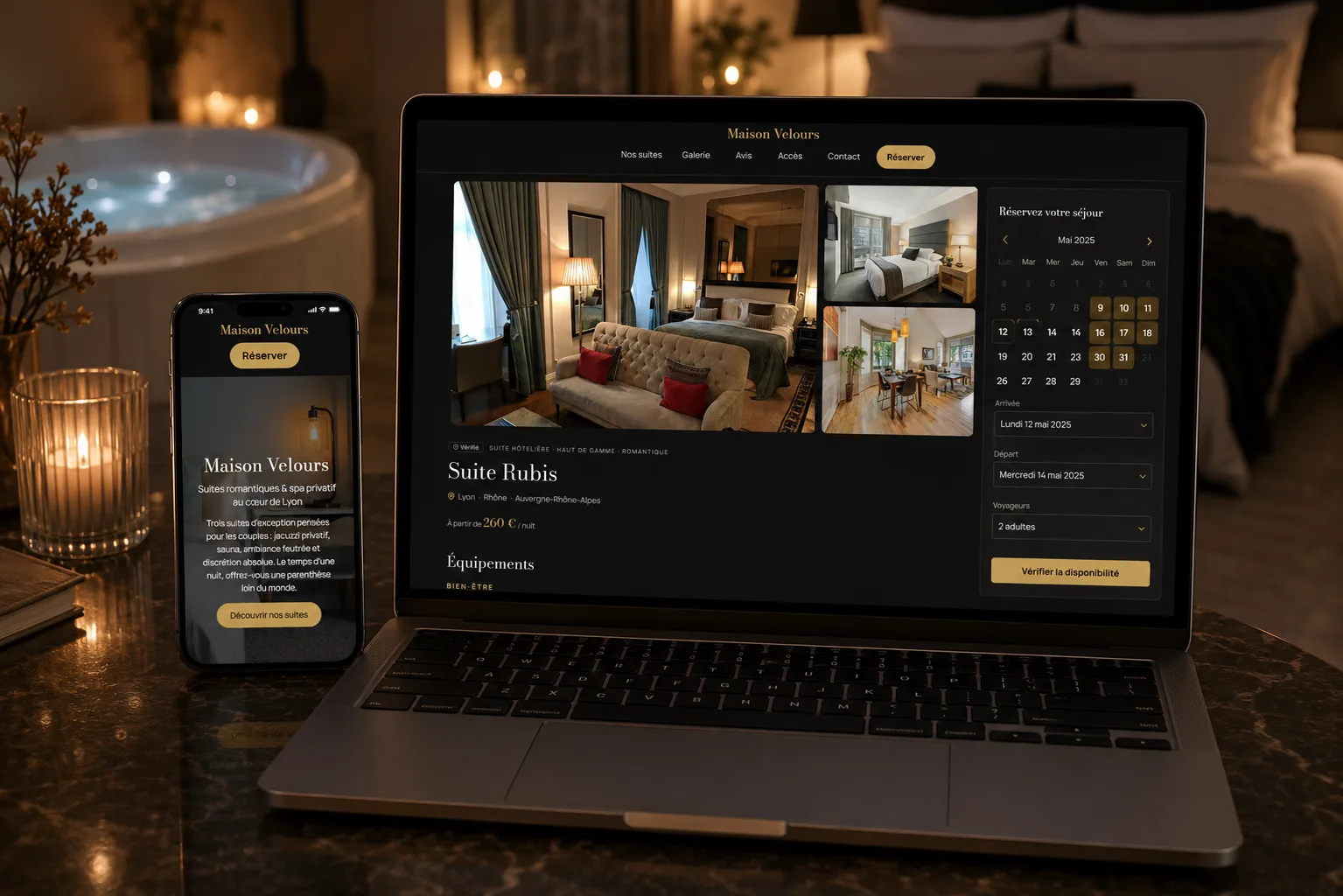
These exact issues are what led us to create Site Studio by Love in Room.
We wanted to avoid having to choose between three imperfect options:
paying several thousand euros to have a custom site built
spending a week building your own site, then continuing to pay for the various tools needed to run it;
or having no real booking website at all and continuing to send every guest to the platforms.
So we started with what a host actually needs, and built the solution around that.
With Site Studio by Love in Room, every property gets its own website, which can be personalised to keep a genuine identity: photos, text, presentation, amenities, atmosphere and practical information all remain specific to each property.
Behind that showcase, all the technical groundwork is already in place.
Guests check availability in real time, select their dates and options, then complete their booking instantly online, in just a few clicks.
Hosts, meanwhile, get a back-office built specifically for renting out Love Rooms: managing availability and rates, syncing calendars, options, bookings and all the information needed to run their property.
No need to have a booking engine built.
No need to install extensions.
No need to manage website hosting.
No domain name to buy and renew every year.
No technical maintenance to carry out.
No updates to keep track of.
And above all, no commission taken on bookings made through your website.
The idea is fairly simple: automate and share whatever can be automated and shared, while leaving each host with what should genuinely belong to them: their property, their identity, their prices and their customers.
So how much does all this cost?
This is probably where the comparison with the cost of not having a website becomes most interesting.
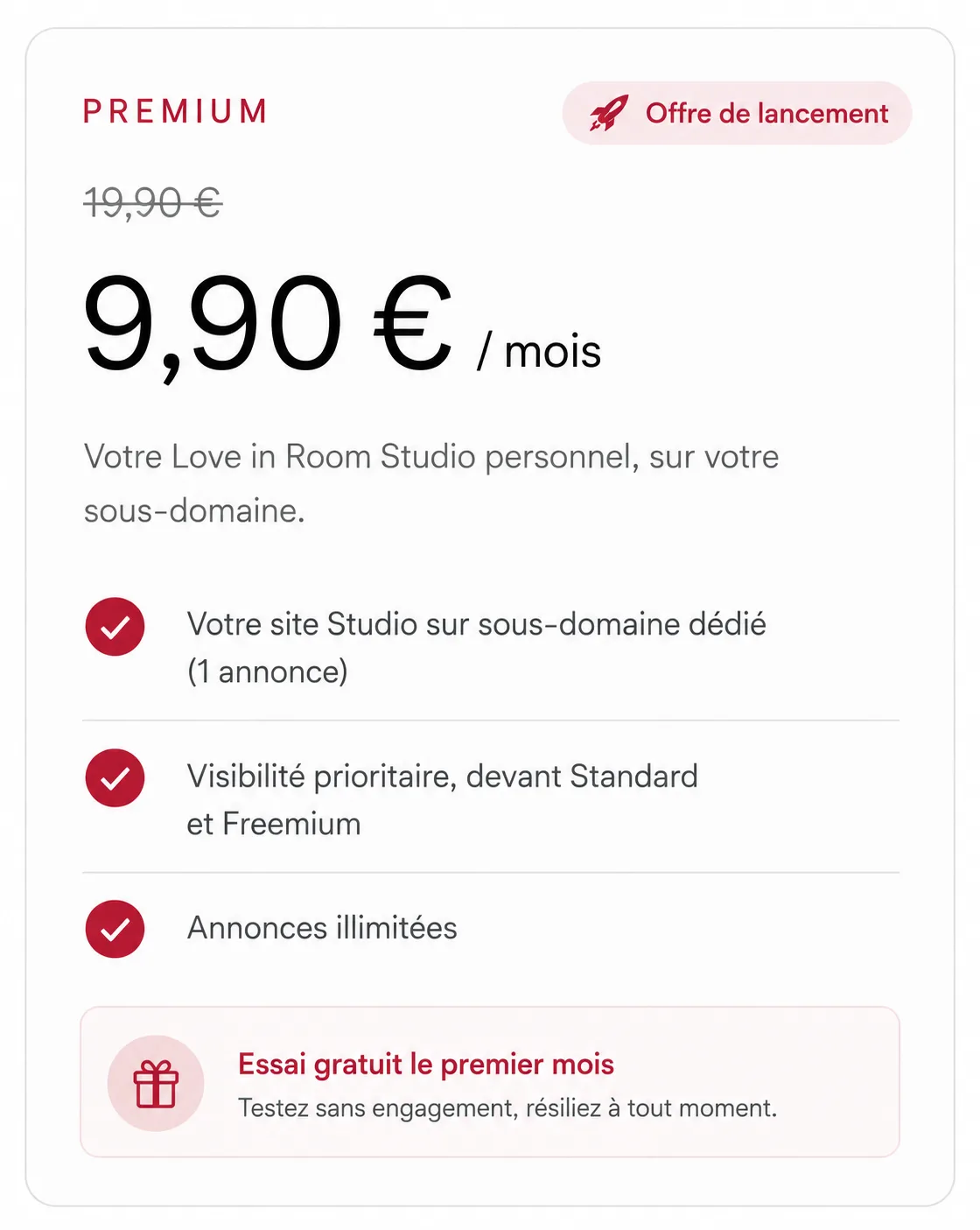
We've seen that a single €220 booking subject to 15% commission already amounts to €33 in fees.
Site Studio by Love in Room is available, as part of its launch offer, at €9.90 a month with no fixed-term commitment.
And there are no set-up fees for the website.
In other words, a single direct booking can cover several months of Studio.
There's no longer any need to wonder whether it will take years to pay off thousands of euros invested in developing a website. The break-even point becomes extremely low.
And that was exactly the goal: to make owning your own booking channel something that's no longer reserved for hosts who can invest several thousand euros.
So, how much should a Love Room website really cost?
Perhaps that isn't really the right question, after all.
A €500 website that doesn't allow bookings is expensive.
A €5,000 website whose development stops you investing elsewhere is expensive.
And having no website at all can also prove very costly, when guests who already know you keep booking through commission-charging platforms.
The better question would be:
How many direct bookings does my website need to generate to cover its own cost?
With a solution costing €9.90 a month and no set-up fees, the answer can sometimes come down to a single booking.
From that point on, the website stops being an extra expense added to the project.
It becomes what it should always have been: a genuine direct booking channel.
Read also
Continue your editorial journey

Truth or Dare for Couples: 100 Questions and Dares, from Sweet to Spicy
Start with the sweet questions and decide together how far you want to go. These 100 truth or dare cards move from funny memories and unexpected confessions to flirty challenges designed for two.

Moon Sign: Emotions, Love and Rising Sign
The Moon sign is associated with emotions and emotional needs in astrology. But it becomes more interesting when compared with your Sun and rising sign: what you show on a first date may not be what you need once the door is closed.

36 Questions to Fall in Love
The famous 36 questions to fall in love came from a real psychology study, but the research never claimed to manufacture love. Here are all 36 questions, how the 45-minute protocol actually worked, what it measured, and why the famous four minutes of eye contact are usually attributed to the wrong experiment.