

How to Create and Run a Love Room in 2026: The Complete Guide
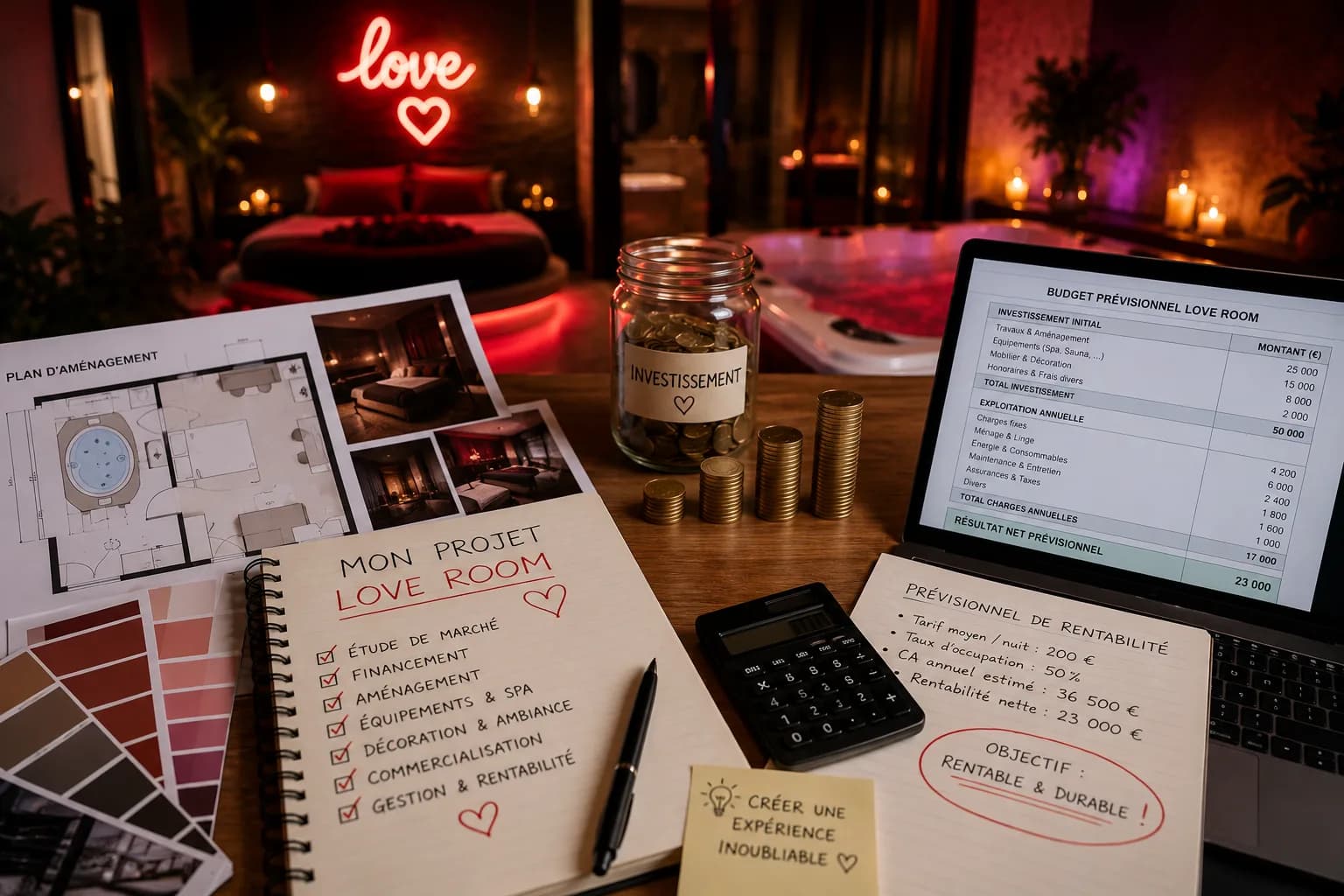
Creating a Love Room — a themed romantic suite designed for couples — can be an excellent way to add value to a property and offer something different from standard short-term rentals. But installing a hot tub, adding a few dimmed lights and publishing a listing is no longer enough. The market has become far more professional, travellers compare listings more carefully, and properties without a real identity increasingly struggle to keep their occupancy rates up.
A profitable romantic suite rests on several things coming together: a good location, a clear concept, sound financing, careful management and a booking strategy that doesn't leave all the margin to intermediaries.
How much can a Love Room really earn? Which legal status should you choose? What equipment is worth investing in? Should you handle cleaning and bookings yourself? And above all, how do you build up direct, commission-free bookings? Here's what you need to know before getting started.
How much does a Love Room earn in 2026?
There's no single average income figure that applies to every romantic suite of this kind. Results vary considerably depending on the region, local competition, nightly rate, level of equipment and quality of marketing.
A suite priced at €160 a night and booked eight nights a month generates around €15,360 a year in revenue. At €220 with fourteen nights booked monthly, revenue reaches €36,960. A high-end suite sold at €290 and occupied twenty nights a month can approach €69,600 a year.
These figures aren't profitability promises. They simply show that the result depends as much on the occupancy rate as on the price charged.
Revenue isn't the same as profit
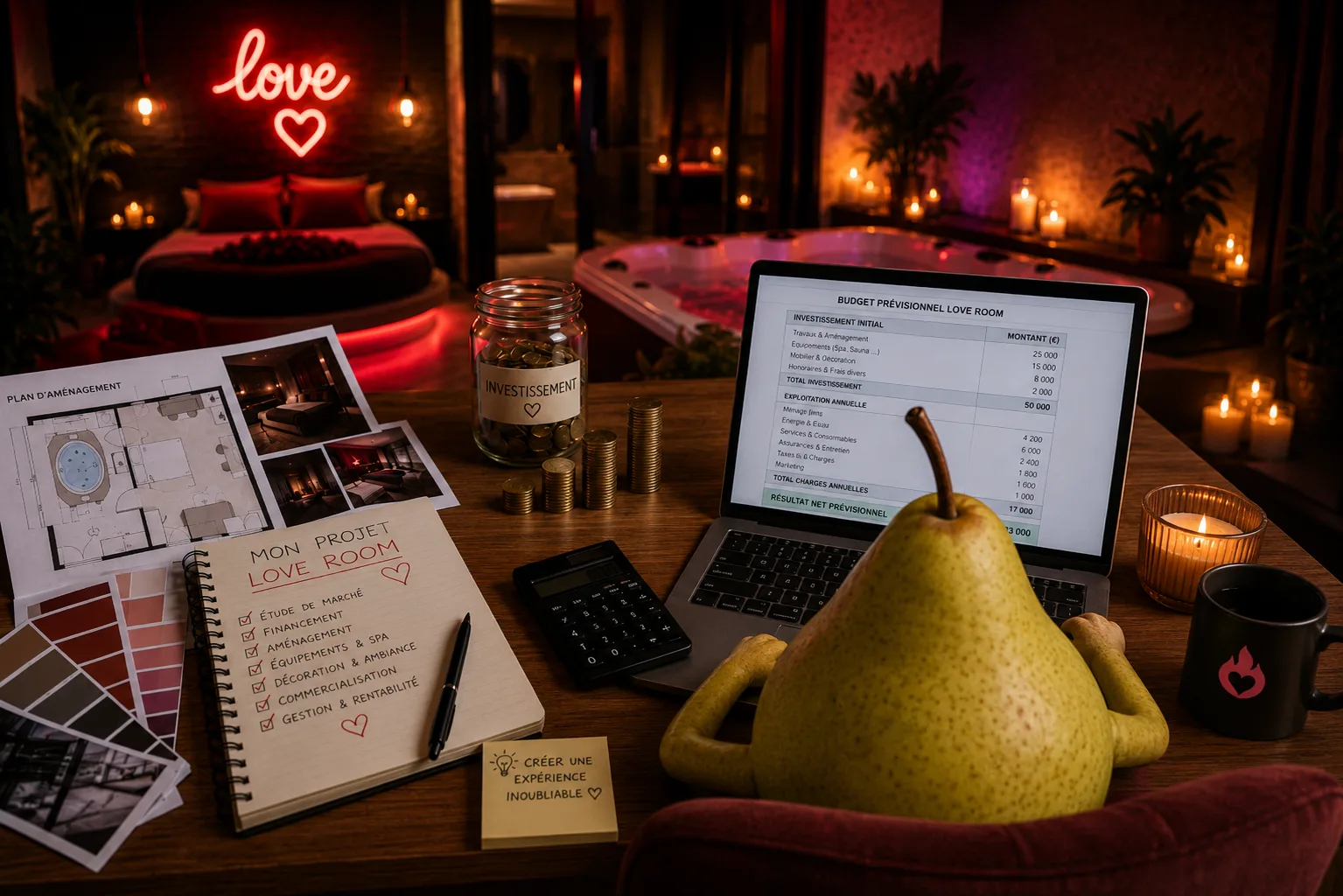
A property like this can generate €40,000 in revenue without leaving €40,000 in the owner's pocket. You need to deduct cleaning, linen, water, electricity, consumables, spa maintenance, insurance, property tax, the CFE business tax, accounting, repairs, banking fees and loan repayments.
The hot tub in particular represents an ongoing cost: heating the water, treatment, draining, wearing parts and technical call-outs. The more equipment a property has, the larger its maintenance reserve needs to be.
The right approach is to work out what's left after all the costs tied to each stay, then after fixed overheads. A night sold at €220 might look very profitable, but far less so once you factor in €50 for cleaning, €20 for energy and consumables, and any platform fees.
Extras quickly boost the average booking value
Romantic add-ons let you increase revenue without adding a single night to the calendar. Rose-petal decoration, breakfast, a late check-out, a bouquet or an anniversary package can each add several tens of euros to a booking.
It's better to offer a handful of clear packages than an endless list. A romance package, an anniversary package and a proposal package meet needs that are easy to understand and simple to prepare.
Gift cards are also worth considering. They bring in cash flow ahead of time and reach people looking for a gift for a couple rather than accommodation for themselves.
The goal isn't necessarily to fill every single night
Maximum occupancy doesn't always mean maximum profitability. A suite booked thirty nights a month wears out fast and leaves little time for maintenance. If that occupancy comes from constant discounting, margins can end up disappointing.
It's often better to aim for a balance between average rate, occupancy and management costs. Before launching, work out a cautious scenario, a realistic one and an optimistic one. The project needs to withstand its monthly repayments even if the first few months are slower than expected.
How do you create a Love Room?
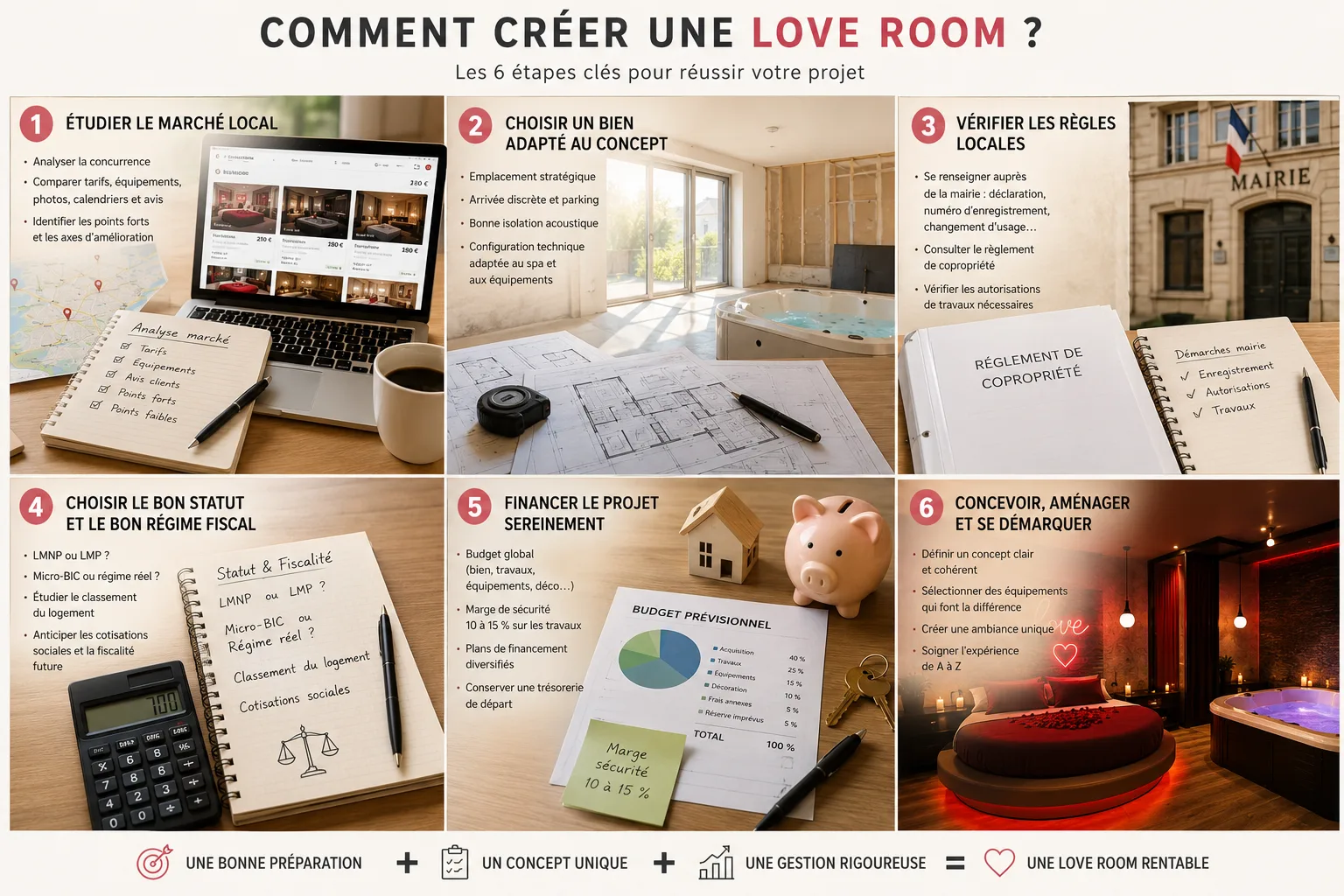
It's first and foremost a property and business project. Decoration should only come after checking the regulations, technical feasibility and financing.
Study the local market
A genuine market study isn't just about counting the romantic suites nearby. You need to compare their rates, equipment, photos, calendars and reviews.
Guest reviews are particularly useful. They reveal what genuinely appeals, but also recurring issues: lack of privacy, poor soundproofing, a hot tub that's too cold, mediocre bedding or confusing check-in instructions.
The project needs to answer a simple question: why would a couple book this suite rather than another one? A hot tub alone is no longer always enough. The difference might come from a view, an atmosphere, a level of service, a rare feature or greater privacy.
Choose a property suited to the concept
The best location isn't necessarily the most touristy one. A large share of guests are looking for a getaway less than two hours from home, so proximity to a town, a main road or a train station can be decisive.
The property also needs to allow discreet arrivals, easy parking and good soundproofing. In an apartment building, frequent comings and goings and late check-ins can quickly create tension with neighbours.
The technical setup matters just as much. A spa produces humidity, uses energy and needs to stay accessible for maintenance. Ventilation, drainage, electrical capacity, waterproofing and floor strength should all be assessed before any finishing touches are added.
Check local rules before you buy
A Love Room is generally operated as a short-term furnished rental or registered tourist accommodation. The requirements vary from one council to another: declaration, registration number, change of use or specific restrictions. From 20 May 2026, councils must have a registration procedure in place for tourist furnished accommodation, so it's worth contacting the town hall before signing anything definitive.
In a co-owned building, the co-ownership rules and the minutes of recent general meetings deserve close attention. A ban on tourist rentals, a residential-use clause or repeated disturbances can make the project very risky.
Building work may also require prior notification or planning permission, particularly if it changes the façade, adds an extension, adds a terrace or changes the intended use of a space.
Choose the right legal status and tax regime
Income from a furnished rental is taxed under the BIC category (industrial and commercial profits). Depending on their revenue and other professional income, an owner may fall under the LMNP or LMP status (non-professional or professional furnished-letting status).
To qualify as a professional furnished-letting landlord, annual receipts must exceed €23,000 and be higher than the household's other earned income.
The choice between the micro-BIC scheme and the actual expenses regime then depends on how the property is classified, its revenue and its level of costs. For 2026 income, the micro-scheme threshold for unclassified tourist furnished accommodation is €15,000, compared with €83,600 for classified properties. Since the tax rules have changed considerably, it's worth reviewing the property's classification with an accountant.
The actual expenses regime can be worthwhile when there's a loan, significant renovation work and substantial costs, since it allows you to deduct eligible expenses and apply depreciation. It does, however, require fuller accounting and should also be weighed against the tax implications of a future resale.
Beyond €23,000 in annual receipts from short-term furnished letting, social security contributions also become a key consideration.
Whether to operate as a sole trader, a family-owned limited company (SARL de famille), a trading company or another structure depends on the number of partners, the financing and your wider wealth strategy. An SCI (non-trading property company) should be approached with caution, since furnished letting is treated as a commercial activity for tax purposes.
Finance the project without straining your cash flow
The budget shouldn't be limited to the purchase price, the visible renovation work and the hot tub. You also need to plan for acquisition costs, electrical work, plumbing, ventilation, insulation, decoration, equipment, a photographer, software, initial consumables and a reserve for unexpected costs.
A safety margin of 10 to 15% on renovation work is reasonable. Building projects often uncover unplanned expenses, particularly when a spa, sauna or steam shower is being added.
Financing can combine personal savings, a mortgage, a business loan, an honour loan (prêt d'honneur) or financing dedicated to specific equipment. Bpifrance points out that a solid loan application needs a credible market analysis, a balanced financing plan and a precise business plan.
It's better to keep some starting cash in reserve than to spend your entire budget on decor. A new venture like this can take several months to gather its first reviews and reach a steady pace.
How do you make a Love Room profitable?
Profitability is built through day-to-day management. A beautiful suite can lose money if cleaning is poorly organised, if prices stay fixed all year round, or if every booking passes through costly intermediaries.
Manage it yourself or outsource it?
Managing directly means keeping more margin and controlling quality. But it also means replying to guests, organising arrivals, checking the spa, preparing the extras and dealing with problems — sometimes late at night.
A concierge service adds convenience, but its cost has to be added on top of platform commissions. When several intermediaries each take a cut, a substantial share of revenue disappears before energy bills and loan repayments are even covered.
A hybrid setup often works well: the owner keeps control of pricing, bookings and customer relations, while a local provider handles cleaning, linen and on-site work.
Make cleaning a professional operation

In a Love Room, cleanliness is part of the experience itself. A mark left in the hot tub or a stray hair on the bed can be enough to trigger a bad review.
Cleaning should follow a precise procedure: checking the linen, disinfecting the spa, checking consumables, testing the equipment and taking photos after each turnover.
The property should also be designed to be cleaned quickly. Fragile surfaces, hard-to-maintain fabrics and too many decorative objects push up costs unnecessarily.
Adjust prices to demand
A flat rate all year round is rarely the best approach. Saturdays, the eve of public holidays, Valentine's Day and certain local events can support a higher price. Weeknights can be boosted with a tailored offer or an included late check-out.
Owners should track their average rate, occupancy, the real cost of each booking and where each guest comes from. A discount is only worthwhile if it covers the cost of the stay and still contributes to fixed overheads.
Focus on the equipment guests actually want
The private hot tub remains the most obvious piece of equipment for a Love Room. It's easy to understand, looks great in photos and can be used year-round.
Bedding is less eye-catching, but it directly shapes reviews. A comfortable bed and good-quality linen should take priority over certain gadgets.
A sauna, steam room, fireplace, projector, indoor pool, round bed or private terrace can then strengthen the positioning further.
More sensual features, such as the tantra sofa, a sex swing, a dance pole, mirrors or a St Andrew's Cross, appeal to a specific clientele and should be worked in thoughtfully and tastefully.
Before any purchase, ask whether the item will be visible in photos, genuinely used, and profitable enough to justify its upkeep.
Choose a clear mood
Romantic, cocooning styles appeal to a broad range of guests: wood, warm lighting, a fireplace and heavy fabrics all easily create a sense of intimacy.
A contemporary luxury style allows for a higher price point, but demands flawless finishes. A nature and escape theme works well in a chalet, cabin or secluded house. A more sensual atmosphere can use indirect lighting, mirrors and dedicated equipment, without tipping into clutter.
Guests should understand the concept from the very first photo.
Airbnb, Booking or a specialist platform: where should you list your Love Room?
A solid strategy relies on several channels at once. The major platforms bring traffic, specialist platforms attract a more qualified audience, and your own website builds direct bookings.
Airbnb and Booking: visibility, at a real cost
Airbnb and Booking can be useful for launching a romantic suite and gathering the first reviews. But bookings aren't free. Airbnb charges service fees that depend on the type of account and booking, while Booking charges a commission calculated according to the contract agreed with the property owner.
A 15% commission on a €250 night comes to €37.50. Across a hundred bookings, that's €3,750 that goes towards neither maintenance, nor renovation, nor repaying the project.
These platforms can still be useful, but they shouldn't become your only source of guests.
The appeal of a specialist platform
A platform dedicated to Love Rooms attracts visitors who are already looking for a private hot tub, a romantic suite or a weekend away as a couple. The property is no longer lost among family flats and general holiday rentals.
Visibility is more targeted, and the concept can be presented through filters and categories genuinely suited to what couples are looking for.
Love in Room: the first fully commission-free platform

Love in Room was built around a simple principle: hosts should be able to keep what guests actually pay.
Love in Room is the first platform in the world dedicated to Love Rooms to offer a fully commission-free model, for hosts and guests alike. No percentage is taken from the booking amount. The bigger the property grows, the greater the saving compared with a traditional platform.
The goal isn't necessarily to drop Airbnb or Booking straight away, but to gradually reduce how much of your revenue depends on them.
Why every Love Room needs its own website
A personal website is essential for building an independent brand. It lets you present the property, its photos, equipment, extras, terms and story exactly as you want.
Above all, it lets guests check availability and book immediately, without going through a platform that takes a commission.
A basic showcase site with a contact form is no longer enough — every manual step loses bookings. Guests need to be able to choose their dates, add extras and pay online.
Love in Room therefore gives every host a dedicated personal website, with no competitors displayed on the page. It can become the official address for the property and be used on Google, Instagram, gift cards or materials handed to guests.
As part of the launch offer, this website — complete with a calendar and online booking — is available for just €9.90 a month. A single direct booking can be enough to cover several months of subscription.
Mistakes that stop a Love Room from filling up

Launching without checking the regulations
Buying before contacting the town hall or reading the co-ownership rules can make a project unworkable. Rules need to be checked before any building work, and ideally before signing anything final.
Copying the competition
A romantic suite with no real identity will often have to cut its prices to attract attention. The project needs a distinctive element: architecture, atmosphere, view, level of service or a rare feature.
Neglecting the technical side
Poor ventilation, inadequate insulation or an undersized electrical setup can lead to breakdowns, damp and disputes with neighbours. Invisible work should always come before decoration.
Piling on the equipment
Too much equipment drives up maintenance costs without guaranteeing more bookings. A few strong, reliable, well-matched features are worth more than a cluttered room.
Using mediocre photos
Photos stand in for the viewing. A shoot by a professional property or hospitality photographer can transform a listing's conversion rate.
Writing a generic listing
The text needs to describe the experience, but also answer practical questions: access, parking, self check-in, equipment, included services and level of privacy.
Not offering online booking
A couple ready to book doesn't always want to wait for a reply or make a bank transfer. Without a live calendar and instant payment, you lose guests.
Relying on a single platform
A drop in visibility or a suspended listing can send revenue plunging overnight. Combining a specialist platform, an official website and several other channels reduces that risk.
Underestimating cleaning and maintenance
Cleanliness needs to stay consistent. You should also keep a reserve to replace a spa, fix a lock or repair a water heater without waiting for the next booking.
Not tracking the numbers
Owners need to know their average rate, occupancy, average spend on extras, commissions and margin per stay. Filling more nights is pointless if each booking brings in too little.
Building a profitable Love Room takes a complete strategy
A profitable Love Room is never just a hot tub and nice decor. It relies on a well-suited property, a solid legal framework, careful financing and professional management.
Equipment, photos and atmosphere are what prompt the booking. Cleaning, the quality of the stay and maintenance are what build the reviews. And diversifying your channels is what protects your margin.
Airbnb and Booking can help with the launch, but the goal should be to gradually grow direct bookings. With its fully commission-free model and its dedicated personal website at €9.90 a month, Love in Room lets hosts keep their revenue, build guest loyalty and run a business that's less dependent on the major platforms.
Creating a Love Room isn't just about renting out a night. It's about offering an experience compelling enough to be chosen, well-run enough to be profitable, and memorable enough to make guests want to come back.
Read also
Continue your editorial journey
Romantic Getaways: Why Unusual Stays Can Bring You Closer
Sleeping in a treehouse, under a transparent dome or on the water changes your habits, your pace and the attention you give each other. Here is why unusual places can create more room for connection — and how to choose the kind of stay that suits you both.
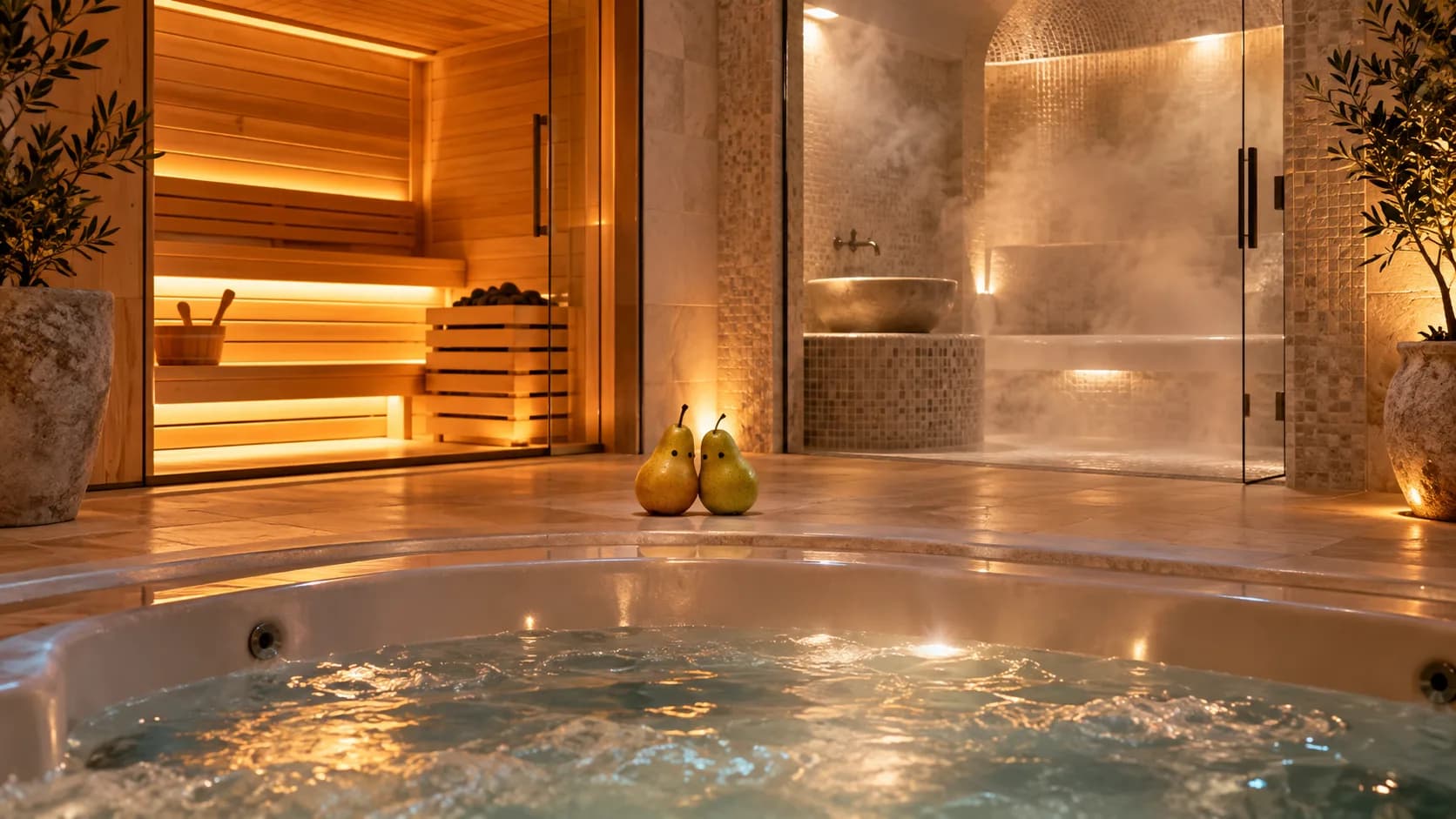
Hammam or sauna: which to choose as a couple, and in what order with the jacuzzi
Dry or humid heat, how long to stay in, the order with the jacuzzi, and champagne: what is established, what is only a convention, and a timed plan for a private spa evening for two.

Wedding Anniversary: Gifts, Messages & Celebration Ideas
Find the right gift, write something personal and decide how to celebrate your wedding anniversary. Includes the French anniversary chart and real prices from 1,161 Love in Room stays.